People Who Loved Too Deeply Usually End Up Alone — Why It Happens and How to Heal often search the internet late at night with one quiet question: Why do I always end up alone?, If that question feels familiar, you’re not broken—and you’re not imagining the pattern.
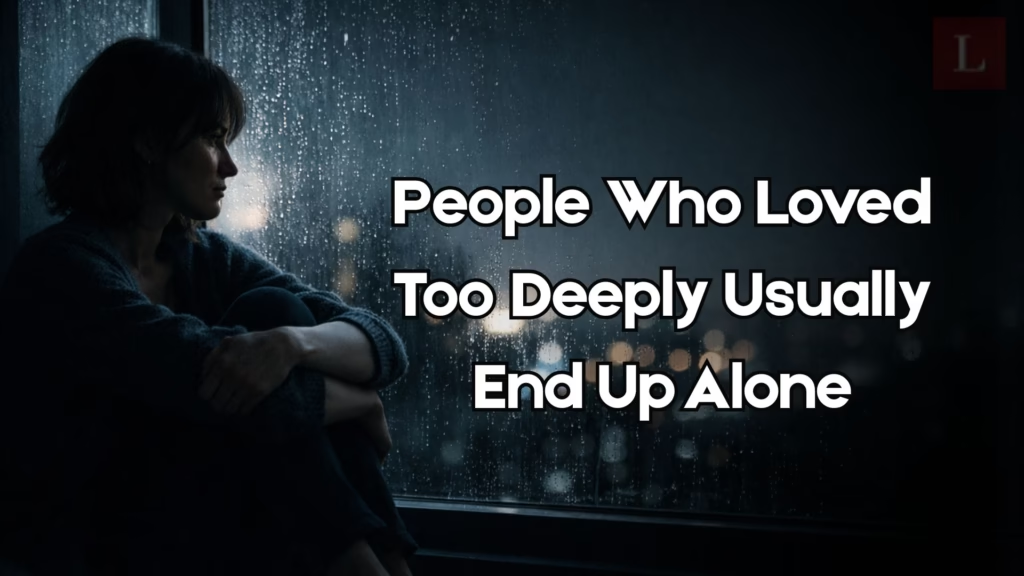
People Who Loved Too Deeply Usually End Up Alone due to emotional burnout from giving more than they receive.
In this article, you’ll learn why loving too much creates distance instead of closeness, the psychology behind it, and how to protect your heart without becoming closed off.
This isn’t about blaming your depth.
It’s about understanding it.
People who love too deeply are often praised for their empathy, loyalty, and emotional intelligence. But beneath that praise is exhaustion. When you’re always the one trying harder, staying longer, and caring more, loneliness can creep in—even while you’re still with someone.
The truth is simple and painful: love is the one place where working harder doesn’t guarantee better results.
People Who Loved Too Deeply Usually End Up Alone: The Psychology of Loving Too Much
People who love too deeply often operate from heightened emotional awareness. They notice tone shifts, energy changes, and emotional distance before anyone else does. This sensitivity can be a gift—but without emotional boundaries, it becomes a burden.
From a psychological perspective, loving too much is often linked to attachment styles, particularly anxious attachment. When closeness feels uncertain, the instinct is to give more, explain more, and try harder.
This creates a cycle of unrequited effort.
You pour in energy hoping it will finally stabilize the connection.
Instead, it drains you.
Over time, this leads to empath exhaustion—the quiet burnout that comes from caring deeply without being met halfway.
Why Intensity Scares Partners Away
One of the hardest truths for people who love too deeply is this: your depth can feel like pressure to someone who hasn’t healed.
This is known as the mirror effect.
Deep love reflects emotional truth.
For emotionally available partners, that reflection feels grounding.
For emotionally avoidant or unhealed partners, it feels confronting.
Your consistency highlights their inconsistency.
Your vulnerability exposes their avoidance.
So they don’t lean in—they pull back.
This is why people who love too deeply often hear phrases like “I need space” or “You’re moving too fast,” even when their intentions are pure.
Truth Bomb:
Sometimes your love doesn’t scare people because it’s too much—but because it shows them what they’re not ready to give.
Reasons Deep Lovers Often Stay Single
Below are the core psychological reasons people who love too deeply often end up alone. This list also explains why the pattern repeats until something changes.
- They confuse intensity with intimacy
Emotional closeness feels urgent, so relationships move faster than mutual trust can develop. - They over-function emotionally
They anticipate needs, fix problems, and carry emotional weight that should be shared. - They ignore signs they love too much
Red flags are reframed as wounds. Potential feels more important than reality. - They sacrifice self-worth for connection
Self-sacrifice replaces self-respect, leading to imbalance and resentment. - They lack emotional boundaries
Without limits, love turns into self-abandonment instead of partnership.
These patterns explain why people who love too deeply don’t just feel heartbreak—they feel emptiness afterward.
The Self-Abandonment Trap
When loving too much becomes a habit, something subtle happens.
You stop checking in with yourself.
Your needs become flexible.
Your limits feel negotiable.
Your voice gets quieter.
This is where emotional burnout in relationships begins—not at the breakup, but during the relationship itself.
People who love too deeply often end up alone because they slowly disappear while trying to keep someone else close.
Loving Potential Instead of Reality
One of the clearest signs you love too much is staying invested in who someone could be instead of who they are.
Deep lovers are vision-oriented.
They see growth. Healing. Possibility.
But love built on potential asks you to wait indefinitely.
And waiting quietly erodes self-worth.
This is why people who love too deeply often stay longer than they should, hoping effort will eventually turn into reciprocity.
It rarely does.
The Turning Point: From Self-Sacrifice to Self-Respect
The shift doesn’t happen when you stop loving deeply.
It happens when you stop loving past your limits.
People who love too deeply usually end up alone until they realize they don’t need to earn love through effort. They need emotional boundaries.
This is where learning how to set boundaries in a new relationship becomes life-changing. Boundaries don’t block intimacy—they protect it.
Here are three ways to love deeply without losing yourself:
First, match energy instead of chasing it.
Reciprocity should guide connection, not hope.
Second, pause before rescuing.
Ask whether support was requested—or whether anxiety stepped in.
Third, practice self-devotion daily.
Rest, solitude, and self-care are not rewards. They are requirements.
You were never too intense.
You were just pouring into someone who couldn’t hold you.


Why Ending Up Alone Isn’t a Failure
People who love too deeply usually end up alone not as punishment—but as protection.
Alone becomes a reset.
A sanctuary.
A place where love finally turns inward.
This is where the difference between self-worth and self-sacrifice becomes clear.
Where you learn that love should feel mutual, not exhausting.
Choosing yourself doesn’t mean giving up on love.
It means choosing a version of love that can finally meet you where you are.
Final Reflection
It’s that it deserves balance.
What was the moment you realized you were loving too much and receiving too little?
Share your experience. Your insight might be the validation someone else has been searching for.