

Introduction:
Psychology of People Who Go Silent When They’re Hurt or someone is emotionally wounded, we often expect a visible reaction—tears, raised voices, or immediate confrontation. However, for many, the natural response is the exact opposite: complete silence.
Understanding the psychology of people who go silent when they’re hurt is key to navigating modern relationships. Silence isn’t always about being “cold”; it is often a complex internal survival strategy.
Key Takeaways
- The psychology of people who go silent when they’re hurt is rooted in emotional protection, not indifference.
- Silence often reflects overwhelm, fear, or deep emotional processing.
- Not all silence is toxic—there’s a difference between healthy withdrawal and the silent treatment.
- Understanding this behavior can improve communication and emotional connection.
What Is the Psychology of People Who Go Silent When They’re Hurt?
The psychology of people who go silent when they’re hurt reveals a powerful truth: silence is often a response to emotional overload, not a lack of care.
When emotions become too intense, some people don’t argue, shout, or cry—they withdraw. This silence acts as a protective barrier, helping them avoid saying something they might regret or exposing feelings they struggle to express.
Instead of reacting outwardly, they process everything internally.
Why Do People Go Silent When They’re Hurt?
Understanding the psychology of people who go silent when they’re hurt requires looking at the emotional triggers behind this behavior.
1. Emotional Overwhelm

One of the most common reasons is emotional overload.
When feelings become too intense, the brain temporarily shuts down communication. Silence becomes a way to regain emotional control.
2. Fear of Saying the Wrong Thing
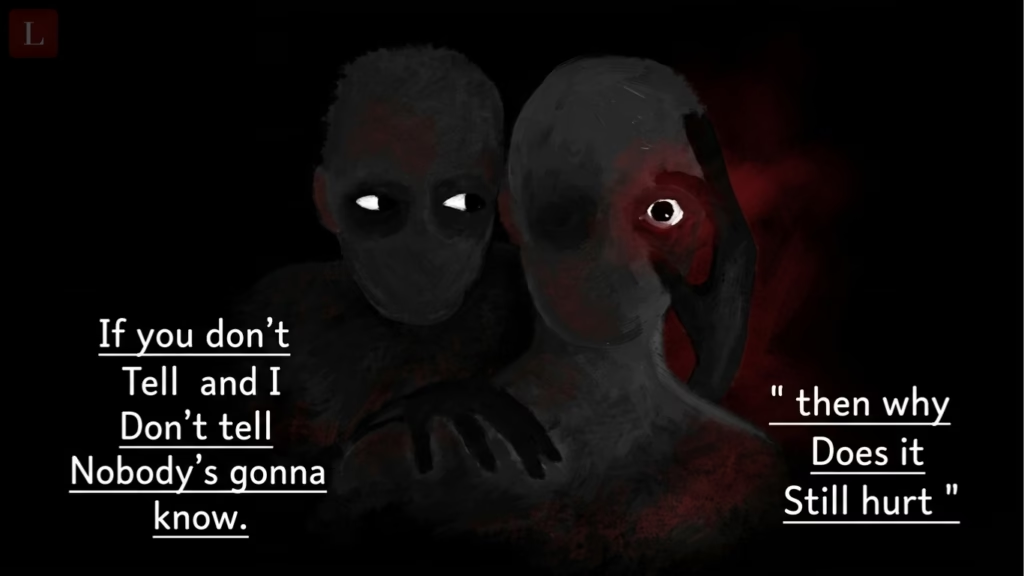
Some people go quiet because they are afraid their words might:
- make the situation worse
- hurt the other person
- be misunderstood
So instead of risking damage, they choose silence.
3. Past Emotional Trauma
People who have experienced:
- rejection
- emotional neglect
- invalidation
often learn that speaking up leads to pain. Over time, silence becomes their safest response.
4. Avoiding Conflict
Not everyone is comfortable with confrontation.
For many, silence is a way to avoid arguments and emotional tension. It feels easier to withdraw than to engage in conflict.
5. Deep Emotional Processing
Some individuals need time to understand their own feelings.
They are not ignoring the situation—they are trying to make sense of it internally before responding.
Is Going Silent the Same as the Silent Treatment?
This is one of the most misunderstood aspects of the psychology of people who go silent when they’re hurt.
Healthy Silence
- Temporary
- Used for emotional processing
- Leads to later communication
Silent Treatment (Unhealthy)
- Intentional avoidance
- Used to punish or control
- Blocks communication completely
Understanding this difference is crucial for maintaining healthy relationships.
What Does Silence Really Mean Emotionally?
Silence often hides emotions that are too heavy to express directly.
People who go silent when hurt may be feeling:
- deep sadness
- disappointment
- emotional exhaustion
- fear of losing someone
- feeling unappreciated
Their silence is not emptiness—it’s emotional intensity without words.
How to Respond to Someone Who Goes Silent
1. Give Them Space
Let them take their time. Don’t pressure them to talk immediately—some people need quiet to understand their feelings.
2. Show Understanding
Let them know you care. A simple “I’m here when you’re ready” can make them feel safe and supported.
3. Avoid Forcing Communication
Don’t push too hard. Forcing them to speak can make them withdraw even more instead of opening up.
4. Encourage Calm Conversations Later
Once they feel better, talk in a peaceful way. Create a safe space where they can express themselves without fear.
Is Silence a Sign of Emotional Strength or Weakness?
Many people assume silence equals weakness. In reality, the psychology of people who go silent when they’re hurtshows the opposite.
Choosing silence can reflect:
- emotional control
- self-awareness
- maturity
It takes strength to pause instead of reacting impulsively.
Why This Behavior Matters in Relationships
Understanding this psychology can transform relationships.
When you recognize that silence is often a coping mechanism, you become more empathetic and less reactive.
This leads to:
- better communication
- deeper emotional connection
- fewer misunderstandings
Final Thoughts
The psychology of people who go silent when they’re hurt teaches us that not all pain is expressed loudly.
Some people carry their emotions quietly, processing everything internally before they are ready to speak.
The next time someone becomes silent, don’t assume they don’t care.
Sometimes, silence simply means they are feeling too much to say anything at all.